Elevate Your Excellence



Your brain does not clearly distinguish between something vividly imagined and something actually experienced. When you mentally rehearse a moment, you activate many of the same neural pathways you use when you do the real thing.
That’s why athletes visualize a race before they run it. It’s why surgeons mentally walk through procedures. It’s why top executives rehearse hard conversations before they walk into the room.
They’re training their nervous system, not just their confidence.
READ: Achieve Exactly What You Want with Dr. Robin Buckley’s Guidance
Most people visualize the wrong way, though. They picture the outcome and skip the process. They see the promotion, the podium, the closed deal. That feels good for about ten seconds and then does nothing.
Effective visualization is specific and a little uncomfortable.
It looks like this: you see yourself in the meeting when the tension spikes. You notice your shoulders tighten. You practice slowing your breath. You hear yourself respond clearly instead of defensively.
Or you imagine mile 18 of the marathon, when your legs are heavy, and your brain starts negotiating excuses. You rehearse staying steady anyway.
 This isn’t about pretending it’s easy. It’s about practicing what you’ll do when it isn’t.
For executives, visualization builds leadership presence. You stop being surprised by pressure because you’ve already been there mentally. You’ve practiced staying grounded when someone challenges you. You’ve already heard the tough question and felt yourself handle it without spiraling.
For athletes, it sharpens execution. The body follows what the brain has already rehearsed. Timing improves. Focus narrows. Decision-making gets faster because the situation feels familiar.
Here’s the quiet benefit people don’t talk about enough. Visualization reduces anxiety. Uncertainty is what makes the nervous system panic. Rehearsal turns the unknown into something known. Even if the outcome isn’t guaranteed, your brain knows how to show up.
READ: Use Uncertainty to Your Advantage
This doesn’t require hours. Five minutes is enough if you do it consistently.
Close your eyes. Pick one upcoming moment that matters. Run it in real time. Include the distractions, the doubt, the physical sensations. Then practice the response you want, not the one you usually default to.
Do this daily, and something shifts. You stop hoping you’ll rise to the occasion. You start trusting that you’ve trained for it because you’ve made your brain an ally instead of a saboteur when it counts.
The Teamwork of Mind and Body
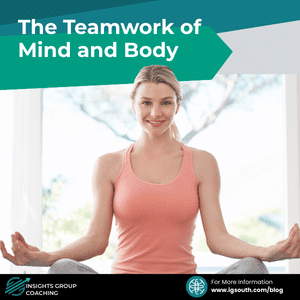 Physical training alone isn’t enough for peak performance. Your physical reps build muscle memory, but without mental reps, your body can’t fully translate potential into action.
Top performers combine physical practice with deliberate mental training, rehearsing movements and strategies in the mind before performing them in reality.
This synergy accelerates skill acquisition. The neural pathways formed during visualization reinforce what your body does on game day.
READ: Staying Consistent with Your Mindset and Training During the Holidays
That’s why high performers notice that the only difference between a good day and a great day is often what happened in their mind before their body even moved. Continuous learning in both mental and physical domains is what makes performance sustainable over the long term.
Emotional Mastery Under Pressure
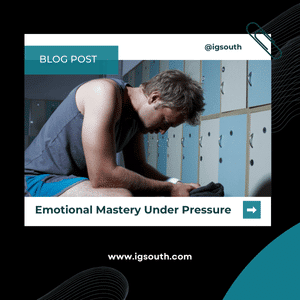 Even with flawless technique, pressure hits can undermine performance if emotions take over. Developing emotional regulation and emotional resilience is just as critical as refining your swing, pass, or pitch. High-stakes moments often reveal a player’s true preparation, not just their skill.
Mental rehearsal gives you a safe space to feel the stress, anticipate mistakes, and respond intentionally rather than reactively.
It also reinforces discipline, so even if you miss a target or experience failure, you can lead yourself back into focus instead of panicking. Over time, this makes staying calm under pressure feel normal and helps you enter a state of flow more naturally.
READ: How to Set Goals With an Executive Coach to Unlock All of Your Potential
By practicing how you manage frustration from a bad call or maintain calm in big moments, you strengthen the mental skills that separate top performers from everyone else. Over time, self-awareness lets you identify blind spots before they cost you, turning emotional turbulence into a source of growth and resilience.
The Invisible Edge of Mental Toughness
Skill alone doesn’t win championships or boardroom battles. Mental toughness is the invisible edge. It’s what lets you stay present when fatigue sets in, recover from setbacks, and perform at your best when game day pressure peaks.
Research shows that athletes who incorporate a proper warm up and mental rehearsal not only improve skill execution but also maintain sustainable performance over time. Consistency in training—both physical and mental—builds the power and ability to handle unexpected demand.
Mental rehearsal builds this toughness. Running through scenarios—both ideal and challenging—trains your mind to stay composed when real-world unpredictability strikes.
Controlling your heart rate and energy during these simulations strengthens both your mindset and your control under pressure. High performance isn’t about avoiding mistakes; it’s about responding with poise and clarity.
The combination of muscle memory from physical practice and mental conditioning ensures that when it counts, your body and mind act in unison. This integrated approach is the hallmark of success for elite athletes, executives, and any high-performing individual.
READ: 5 Lessons on Leadership from a High School Volleyball Coach