Elevate Your Excellence


Executive leadership lessons from a high school coach are often hidden in moments that look like simple sports victories.
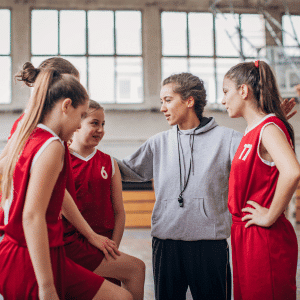 When my daughter’s high school varsity volleyball team won the State Championships in 2021, I got a clear lesson in leadership. Overall, it was an amazing experience to watch, even more so because this group of girls were incredible.
They supported each other, LIKED each other, visibly and audibly had fun when warming up or playing together, and credited their success to being “14 strong”. They worked hard, enjoyed every minute and achieved their goal. This season delivered powerful leadership lessons that apply far beyond the court and into the business world.
But while I was happy for and proud of my daughter and her teammates, their success came due to trickle down. The team achieved success because of their coach, the leader of this group.
This kind of leadership also reflects what the best leaders in any organization consistently practice.
(Knowing the coach is a private individual, I’ll refer to her as Coach R.) It was due to this woman’s integration of powerful leadership skills that the team succeeded.
These are the kinds of valuable lessons that influence personal growth, long-term development, and even career direction.
There were four specific things Coach R did that made her stand out as a leader and brought her team to the championship level. These lessons apply not only to students but also to executives navigating a demanding current role while planning for their future in the business environment.
This is a core reason why executive coaching is so effective; it bridges the gap between theoretical knowledge and practical, on-the-ground application.
1. She created a platform of unity.
Coach R made sure there wasn’t a spotlight on one or two players. There was no “star” of the team. Those on the bench were as valuable as those on the court.
When she was interviewed after winning the State Finals game, Coach R said, “The U.S. volleyball team, their motto is ‘23 strong’.
Even though only 12 players went to the Olympics, it took 23 players to get them there. And so that’s the model that we’ve embraced this year. It takes all 14 of us to earn the state championship, even though not every player was on the floor tonight.”
In an organization, this approach is also true. Is the success of the organization reliant on one member, or the team? And if the focus is on one team member, what does that do to the organization? This is the importance of unity in both sports and leadership in the workplace.
 The other team members feel devalued. They stop giving their all. They lose sight of the goal. And where does it leave the organization if that one “star” leaves?
Left behind is a disjointed, disconnected and dissatisfied group of people. The unity Coach R created became the platform for the team’s approach to the goal. That sense of belonging creates growth, progress, and helps people develop confidence even when leaders face difficult transitions.
This lack of cohesion often leads to a toxic environment where niceness becomes a red flag for underlying cultural issues that hinder true collaboration.
If you want to refine your personal leadership style and drive better business results, schedule a discovery call with our executive coach!
2. She created a shared mission and vision.
Winning the State Championship honestly didn’t seem like the sole purpose of the season. While going to States is a vision for most high school or collegiate teams, it seemed that for Coach R the vision didn’t smother the mission she created with the team.
The mission was twofold: play their best and have fun. Watching the team the night of the Championships demonstrated that mission. The girls were singing and dancing the whole time as they waited for their turn to warm up.
 They weren’t letting stress or anxiety get in the way of their fun. They were meeting the season’s mission even in what was the biggest athletic night for them.
Coach R made sure the girls knew they didn’t have to do anything different from what they did every game. She led her team in this mission, which guided them to attain their vision of the state championship. This is a first lesson many executives can learn: vision matters, but daily behavior matters even more.
The same applies to organizations. Ensuring everyone within organization knows the long-term vision but buys in to the daily mission to get there…and then keeps the mission alive even in the face of the vision.
It makes sense that this approach strengthens team performance because people feel aligned with their path and purpose. It also helps reduce fear when pressure rises.
Maintaining this level of focus during high-pressure moments is a hallmark of thriving under pressure for peak performance, a skill as vital in the boardroom as it is on the court.
3. She recognized her players as individuals, not just players.
This was my daughter’s first season with this coach after transferring to the school. My daughter came home after practice one day, and when I asked her what she did to kill time between the end of the school day and practice, she casually said, “I had my 1-to-1 with Coach today.”
Huh? I had no idea what she meant. Turns out, Coach R schedules time to meet with every player during the season. She sits with each girl, and while she certainly asks about the player’s goals for the season, more importantly, she connects with each girl as a person.
She asks real questions, and they get to ask questions to her. They talk as people, not as coach and player, not as adult and kid, but as women and athletes. That personal connection is what helps people understand each other at a deeper level and strengthens trust.
Can you imagine what this creates and what the same practice could do within an organization? Coach R’s players feel a real connection to her and her to them.
It builds trust. It builds commitment. It increases performance and retention whether in a volleyball program, in a family, or in a Fortune 500 company.
 This practice creates the psychological safety necessary for individuals to feel heard, which is the foundation of any high-functioning professional community.
In leadership terms, this also teaches that great leaders must dedicate time to people, not just performance. That is one of the biggest insights executives gain through leadership development and executive coaching.
It also reminds leaders that employees are shaped by life experiences, including parents, college, and early mentorship, and those experiences affect how they show up at work.
When leaders treat teammates like close friends and respected individuals, it improves engagement and strengthens the organization’s culture and perspective.
This individualized approach is exactly how high performers set goals that stay relevant and achievable, even when external pressures increase.
If you’re ready to close the gap between your current results and your team’s true potential, schedule your Executive Coaching consultation today to start building your championship culture.
4. She demonstrated the behavior and thinking to support the mission.
Coach R never yelled other than in excitement. She never demonstrated frustration. She was either smiling, offering praise, giving motivating talks, or offering coaching strategies for players to use towards the team’s mission and vision.
Coach R’s team saw this every time they looked at her or heard her. Their coach’s attitude and actions became the standard they emulated. She became the model of how to be, and they all adopted that model.
There wasn’t room for negativity because it would’ve been an outlier, an anomaly, and in fact, when typical issues came up through the season, the team quickly dealt with them and positioned themselves back in line with Coach R’s standards. This is how strong leadership creates a healthy sense of accountability and reinforces the right habits.
 Leaders in any organization can do the same. Certainly, there are times that are challenging, but does expressing anger, frustration, or disgust move you closer to your vision or farther away? That question is at the heart of effective leadership and long-term development.
What behavioral, cognitive, and emotional expressions help keep your team on track and focused on the mission and vision? In many ways, leaders must constantly explore their own mindset and keep learning through experience, reflection, and continuous learning.
y establishing clear standards, leaders can move away from authoritarian norms of leadership and toward a culture of mutual accountability and respect.
Overall, the leadership of Coach R worked for one reason: she led based on her own style. Coach R didn’t try to fit into a prescribed type of leadership. She didn’t base her behaviors on famous coaches in an attempt to duplicate their leadership.
This is one of the most overlooked leadership lessons in both athletics and business. This authenticity allows leaders to facilitate shifting paradigms within their organizations, using their unique strengths to drive meaningful change.
She created a leadership style based on her values, her strengths, and her vision for her players, not the group’s State Championship vision, but her vision as the leader of a program in which each player grew, personally and athletically, because of the support they gave and received from their team.
That kind of leadership inspires personal and professional growth, and it helps individuals stay focused on long-term progress.
 “It’s the buy-in. They buy into each other so hard, it’s ridiculous,” Coach R said. “Their strength is in the group. We work really hard in the gym every day on our skills, but we know that at this age level, having that cohesion can bring you from a 5 to an 11.
They buy into that. They work hard every day, but it’s because of each other … that’s what makes them truly special.” All due respect to Coach R, while it was due to the players’ connection and support of each other, even more, it was because as a leader Coach R created and showed what it means to be part of a winning team.
These executive leadership lessons from a high school coach are reminders that leadership is taught through actions, reinforced through relationships, and strengthened through shared commitment in every community.
Research consistently shows that mindset beats skill when it comes to long-term success, as your internal narrative dictates how you handle every external challenge.
Why Encouraging Leadership Is Essential Throughout the Journey
One of the most encouraging parts of Coach R’s leadership style is that she never assumed her players would automatically know how to work together, stay motivated, or handle pressure. Instead, she treated leadership as a journey—something that must be built daily through consistent actions, support, and trust.
 In the business world, many leaders make the mistake of believing culture will “just happen,” or they assume high performers will naturally stay engaged without guidance.
But the truth is, encouraging leadership is essential for long-term success. Just like in sports, employees need reinforcement, clarity, and connection to stay aligned with the mission.
Coach R proved that strong leadership isn’t only about strategy—it’s about showing up in a way that builds confidence and commitment over time.
Insights Group helps organizations strengthen leadership capability by providing development programs and strategic guidance that support encouraging leaders throughout every stage of their journey. Contact us at 1 888-885-1736 for personalize executive coaching.
Coaching helps leaders avoid the amygdala hijack, ensuring they remain rational and strategic even in the most demanding business environments.
Whether you’re coaching athletes or leading professionals, the journey becomes more meaningful when leaders focus on encouragement, because that is what keeps people growing and moving forward together—just as demonstrated in these executive leadership lessons from a high school coach.